Fastest hosting providers are essential for a website's success. They offer lightning-fast loading speeds, crucial for user experience and . But what makes hosting "fast" and how do you find the best options? This guide dives into the factors that influence website speed, explores different hosting types, and highlights key features that contribute to optimal performance.
We'll also examine how to choose the right hosting provider based on your needs, discuss website optimization techniques, and showcase real-world examples of websites known for their speed. By the end, you'll have a comprehensive understanding of how to achieve the fastest website possible.
Defining "Fastest" Hosting

Website speed is crucial for a great user experience and for . When we talk about "fastest" hosting, we're not just referring to a server that can handle a lot of traffic. We're talking about a combination of factors that contribute to a lightning-fast website.
Factors Affecting Website Speed
Several factors contribute to a website's speed, and understanding them is essential for choosing the right hosting provider. Let's delve into the key factors:
- Server Response Time:This is the time it takes for a server to respond to a request from a browser. A faster server response time means a quicker website load time.
- Page Load Time:This is the time it takes for all the elements of a webpage to load, including images, scripts, and CSS files.
- Bandwidth:This refers to the amount of data that can be transferred between your server and a user's browser. Higher bandwidth means faster data transfer speeds.
These factors directly impact user experience and . Slow websites can lead to frustrated users, higher bounce rates, and lower search engine rankings. Conversely, fast websites can improve user engagement, lower bounce rates, and boost rankings.
Metrics for Measuring Website Speed
Several metrics are used to measure website speed, and understanding them can help you identify areas for improvement. Here are some of the most common:
- Time to First Byte (TTFB):Measures the time it takes for the first byte of data to be received from the server.
- Page Load Time:Measures the time it takes for all elements of a webpage to load.
- Speed Index:Measures how quickly content appears on a webpage, giving a sense of perceived speed.
Types of Hosting and Speed
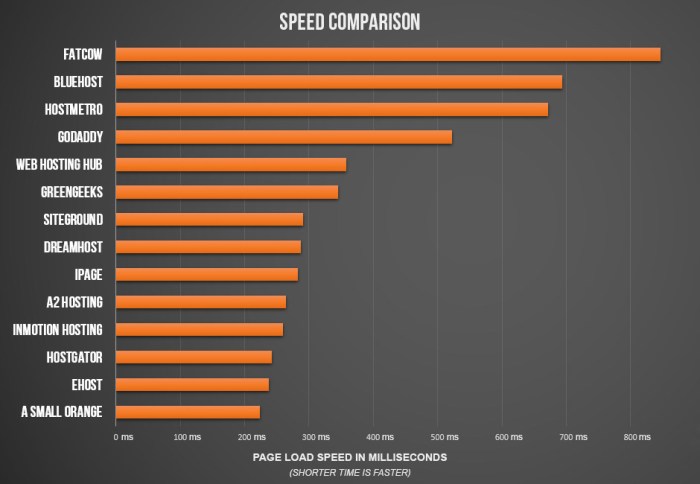
Different hosting types offer varying levels of performance and resource allocation, impacting website speed. Let's compare the speed performance of popular hosting types:
Shared Hosting
Shared hosting is the most affordable option, where multiple websites share the same server resources. While it's budget-friendly, shared hosting can lead to slower performance, especially when other websites on the server experience high traffic.
- Pros:Cost-effective, easy to set up.
- Cons:Limited resources, potential for slowdowns due to shared resources.
- Examples:HostGator, Bluehost, GoDaddy.
VPS Hosting
VPS hosting provides a virtualized server environment, offering more resources and control compared to shared hosting. It's a good option for websites that require more power and performance.
- Pros:More resources than shared hosting, better performance, greater control.
- Cons:More expensive than shared hosting, requires more technical knowledge.
- Examples:DigitalOcean, Linode, Vultr.
Dedicated Servers
Dedicated servers provide an entire physical server dedicated solely to your website. This offers the highest level of performance and resources but comes with a higher price tag.
- Pros:Highest level of performance, dedicated resources, maximum control.
- Cons:Most expensive option, requires advanced technical knowledge.
- Examples:Rackspace, OVH, Hetzner.
Cloud Hosting

Cloud hosting distributes your website across multiple servers, providing scalability and redundancy. This allows your website to handle traffic spikes and offers high performance.
- Pros:Scalability, high performance, redundancy.
- Cons:Can be more expensive than shared or VPS hosting, requires some technical knowledge.
- Examples:AWS, Google Cloud Platform, Microsoft Azure.
Key Features for Fast Hosting
Several features contribute to fast website performance, and understanding them is crucial when choosing a hosting provider. Let's explore these essential features:
Essential Features for Fast Hosting
| Feature | Description | Benefits |
|---|---|---|
| SSD Storage | Solid-state drives (SSDs) offer significantly faster read and write speeds compared to traditional hard disk drives (HDDs). | Faster website loading times, improved overall performance. |
| CDN Integration | A content delivery network (CDN) distributes website content across multiple servers geographically located closer to users. | Faster content delivery, improved user experience, reduced server load. |
| Caching Mechanisms | Caching mechanisms store frequently accessed website data in temporary locations, reducing the need for repeated server requests. | Faster page load times, reduced server load, improved performance. |
Choosing the Right Hosting Provider: Fastest Hosting Providers
Selecting the right hosting provider is crucial for achieving optimal website speed. Here's a checklist of factors to consider:
Checklist for Choosing Fast Hosting
- Server Location:Choose a server location geographically closer to your target audience for faster content delivery.
- Uptime Guarantee:Look for a hosting provider that offers a high uptime guarantee, ensuring your website is available to users.
- Customer Support:Choose a hosting provider with responsive and reliable customer support, ensuring you get help when needed.
- Security Features:Ensure the hosting provider offers robust security features to protect your website from threats.
- Scalability:Choose a hosting provider that offers scalable solutions, allowing you to upgrade your plan as your website grows.
By considering these factors, you can choose a hosting provider that meets your specific needs and delivers optimal website speed.
Optimizing Website Speed

Even with fast hosting, optimizing your website for speed is essential. Several techniques can enhance website loading times. Let's explore some of these techniques:
Website Optimization Techniques
| Technique | Benefits | Implementation Methods |
|---|---|---|
| Image Optimization | Reduces image file sizes without sacrificing quality, leading to faster page load times. | Use image optimization tools like TinyPNG or Optimizilla, compress images using lossy compression, choose appropriate image formats. |
| Code Minification | Removes unnecessary characters from HTML, CSS, and JavaScript code, reducing file sizes. | Use online minification tools or integrate minification plugins into your development workflow. |
| Browser Caching | Stores website data in a user's browser, reducing the need for repeated server requests. | Set appropriate cache headers in your website code to enable browser caching. |
| Lazy Loading | Loads images and other content only when they are visible on the screen, improving initial page load time. | Implement lazy loading using JavaScript libraries or browser-specific attributes. |
Real-World Examples
Several websites are known for their fast loading times. Let's explore some real-world examples and analyze the factors contributing to their speed.
Examples of Fast Websites, Fastest hosting providers
- Google:Google uses a sophisticated cloud infrastructure and content delivery network (CDN) to deliver content quickly worldwide. They prioritize performance and have a dedicated team focused on website optimization.
- Amazon:Amazon relies on a robust cloud infrastructure and extensive CDN to handle massive traffic and deliver content quickly. They have invested heavily in optimizing their website for performance.
- Facebook:Facebook uses a global CDN and optimizes images and code to ensure fast loading times. They also leverage browser caching and other optimization techniques to enhance performance.
These examples demonstrate that website speed is achievable with the right hosting provider, optimized code, and a focus on performance. By implementing the techniques discussed in this article, you can create a website that loads quickly and provides a positive user experience.
Last Word
Finding the fastest hosting provider is not a one-size-fits-all solution. It requires careful consideration of your specific website needs, traffic volume, and budget. By understanding the factors that contribute to website speed, exploring different hosting options, and implementing optimization techniques, you can create a website that loads quickly and delivers an exceptional user experience.
Questions Often Asked
What is the difference between shared hosting and VPS hosting?
Shared hosting is a cost-effective option where multiple websites share the same server resources. VPS hosting offers more dedicated resources and better performance, but at a higher cost.
How can I measure my website's loading speed?
You can use tools like Google PageSpeed Insights, GTmetrix, or Pingdom to measure your website's loading speed and identify areas for improvement.
What is a CDN and how does it affect website speed?
A CDN (Content Delivery Network) distributes your website's content across multiple servers around the world, reducing latency and improving loading times for users in different locations.
Is it better to choose a hosting provider based on price or performance?
While price is a factor, prioritize performance. Choose a hosting provider that offers the features and resources necessary to ensure your website loads quickly and reliably.
