Choosing the best website and domain hosting is crucial for any online presence. It's the foundation upon which your website thrives, impacting everything from speed and reliability to security and scalability. Whether you're a seasoned entrepreneur launching a complex e-commerce platform or a budding blogger sharing your passion, understanding the nuances of hosting is paramount.
This guide delves into the world of website and domain hosting, breaking down the essential elements to consider. We'll explore different hosting types, key features to prioritize, and the steps to set up and maintain your online home. By the end, you'll be equipped with the knowledge to make informed decisions and find the perfect hosting solution for your needs.
Understanding Website and Domain Hosting
In the digital realm, your website is your online presence, your digital storefront, and your gateway to the world. And just like any physical storefront, your website needs a solid foundation, a place to reside and be accessible to everyone.
This is where website and domain hosting come into play.
Defining Website and Domain Hosting
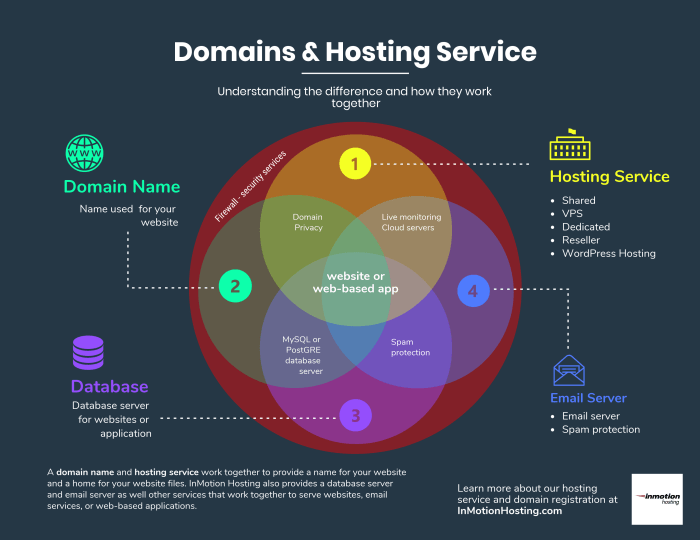
Website hosting refers to the service that allows you to store your website's files (HTML, CSS, images, etc.) on a server that is connected to the internet. This server acts as a central hub, making your website accessible to visitors from anywhere in the world.
Finding the best website and domain hosting can feel like navigating a jungle of options. But if you're looking for more power and control, consider exploring low cost dedicated server hosting. This gives you exclusive access to a server's resources, ideal for high-traffic sites or demanding applications.
Ultimately, the best hosting solution depends on your specific needs and budget, so weigh your options carefully.
A domain name, on the other hand, is your website's unique address on the internet. Think of it as your website's street address, allowing people to easily find you online. When you register a domain name, you essentially reserve that address for yourself.
The Importance of Reliable Website and Domain Hosting
Choosing a reliable hosting provider is crucial for your website's success. Here's why:
- Uptime and Availability:A reliable hosting provider ensures that your website is always accessible to visitors. Downtime can lead to lost traffic, potential customers, and damage to your online reputation.
- Performance and Speed:Slow website loading times can frustrate visitors and lead to higher bounce rates. A good hosting provider optimizes server performance to deliver fast loading speeds, improving user experience and engagement.
- Security:Your hosting provider plays a critical role in protecting your website from cyber threats. Features like firewalls, malware protection, and SSL certificates are essential to keep your data and your visitors safe.
- Scalability:As your website grows, you'll need a hosting provider that can accommodate your increasing traffic and storage needs. Scalable hosting solutions ensure that your website can handle the load and continue to perform optimally.
Key Features to Consider When Choosing a Hosting Provider
When selecting a hosting provider, consider these key factors:
- Hosting Type:Different types of hosting cater to different website needs. We'll explore these types in the next section.
- Uptime Guarantee:Look for a provider that offers a high uptime guarantee, ideally 99.9% or higher.
- Customer Support:Reliable customer support is essential, especially when you encounter technical issues. Choose a provider that offers 24/7 support through various channels like live chat, email, and phone.
- Pricing and Value:Compare pricing plans and features across different providers to find the best value for your money.
- Data Backups:Regular data backups are crucial to protect your website from data loss. Ensure your hosting provider offers automatic backups or provides easy access to backup tools.
Types of Website and Domain Hosting
The type of hosting you choose depends on your website's specific needs, traffic volume, and budget. Here's a breakdown of the most common hosting types:
Shared Hosting
Shared hosting is the most affordable option, where multiple websites share the same server resources. This is ideal for small websites with low traffic volumes, such as personal blogs or small business websites.
- Advantages:Cost-effective, easy to set up, good for beginners.
- Disadvantages:Limited resources, potential performance issues if other websites on the server experience high traffic, less control over server settings.
- Suitable for:Personal blogs, small business websites, websites with low traffic volumes.
VPS Hosting
VPS (Virtual Private Server) hosting provides a virtualized server environment, offering more resources and control compared to shared hosting. It's a good option for websites with moderate traffic and specific resource requirements.
- Advantages:More resources and control than shared hosting, better performance, improved security.
- Disadvantages:More expensive than shared hosting, requires some technical knowledge to manage.
- Suitable for:E-commerce websites, websites with moderate traffic, websites with specific resource needs.
Dedicated Hosting
Dedicated hosting provides an entire server dedicated solely to your website. This offers the highest level of performance, security, and control. It's suitable for high-traffic websites, demanding applications, or businesses that require maximum uptime.
- Advantages:Unmatched performance, maximum security, full control over server settings.
- Disadvantages:Most expensive option, requires advanced technical knowledge to manage.
- Suitable for:High-traffic websites, demanding applications, businesses that require maximum uptime and security.
Cloud Hosting
Cloud hosting distributes your website across a network of servers, providing high scalability and redundancy. This ensures that your website remains accessible even if one server experiences downtime.
- Advantages:High scalability, high availability, excellent performance, cost-effective for fluctuating traffic.
- Disadvantages:Can be more complex to manage, may require a learning curve.
- Suitable for:Websites with unpredictable traffic patterns, large-scale applications, businesses that require high availability.
Key Factors to Consider
Uptime and Reliability

Uptime is the percentage of time your website is accessible to visitors. A high uptime guarantee is crucial for any website, especially for businesses that rely on their online presence. A reliable hosting provider ensures that your website is always available to your target audience, minimizing downtime and potential revenue loss.
Website Speed and Performance
Website speed is critical for user experience and
Factors like server location, caching, and content delivery networks (CDNs) play a significant role in website speed.
Security Features
Protecting your website from cyber threats is essential. A reliable hosting provider offers security features like firewalls, malware protection, and SSL certificates to keep your data and your visitors safe. An SSL certificate encrypts data transmitted between your website and visitors, ensuring secure communication and building trust with your audience.
Website Backups and Data Recovery
Regular data backups are crucial to protect your website from data loss due to technical issues, cyberattacks, or human error. A good hosting provider offers automatic backups or provides easy access to backup tools, allowing you to restore your website to a previous state in case of an emergency.
Choosing the Right Hosting Provider
The best hosting provider for you depends on your specific website needs, budget, and technical expertise. To help you make an informed decision, consider these factors and compare different providers based on the following table:
| Hosting Provider | Hosting Type | Pricing | Key Features | Customer Support |
|---|---|---|---|---|
| HostGator | Shared, VPS, Dedicated, Cloud | Starting from $2.75/month | Free domain name, unlimited disk space and bandwidth, website builder, cPanel control panel | 24/7 customer support via phone, chat, and email |
| Bluehost | Shared, VPS, Dedicated, Cloud | Starting from $2.95/month | Free domain name, free SSL certificate, website builder, cPanel control panel | 24/7 customer support via phone, chat, and email |
| GoDaddy | Shared, VPS, Dedicated, Cloud | Starting from $5.99/month | Free domain name, website builder, cPanel control panel, email marketing tools | 24/7 customer support via phone, chat, and email |
| SiteGround | Shared, VPS, Cloud | Starting from $3.95/month | Free SSL certificate, daily backups, free website migration, cPanel control panel | 24/7 customer support via phone, chat, and email |
| DreamHost | Shared, VPS, Dedicated, Cloud | Starting from $2.59/month | Free domain name, unlimited disk space and bandwidth, website builder, cPanel control panel | 24/7 customer support via phone, chat, and email |
Remember to prioritize features that align with your website's specific needs. For instance, if security is paramount, look for providers with robust security features like firewalls, malware protection, and regular security audits. If performance is crucial, prioritize providers with fast servers, caching mechanisms, and content delivery networks (CDNs).
Setting Up Your Website and Domain: Best Website And Domain Hosting
Once you've chosen a hosting provider, you can start setting up your website and domain. Here's a step-by-step guide:
1. Register Your Domain Name
Choose a domain name that is relevant to your website's content and easy to remember. Use a domain registrar like GoDaddy, Namecheap, or Google Domains to register your chosen domain name.
2. Set Up Your Hosting Account
Create an account with your chosen hosting provider. They will provide you with login credentials and access to your control panel, which allows you to manage your website and hosting account.
3. Connect Your Domain Name to Your Hosting Account
You'll need to configure your domain name to point to your hosting server. This process is called DNS (Domain Name System) configuration. Your hosting provider will provide instructions on how to update your DNS settings. This typically involves updating your nameservers in your domain registrar's account.
4. Install a Content Management System (CMS), Best website and domain hosting
A CMS (Content Management System) makes it easy to create, manage, and update your website content without requiring coding knowledge. Popular CMS options include WordPress, Joomla, and Drupal. Your hosting provider may offer one-click installation for these CMS platforms, simplifying the process.
5. Create Your Website Content
Once your CMS is installed, you can start creating your website's content, including pages, posts, images, and videos. Most CMS platforms provide user-friendly interfaces and tools to help you build your website.
Website Maintenance and Optimization
Essential Website Maintenance Tasks
Regular website maintenance is crucial to ensure its performance, security, and overall health. Here are some essential tasks:
- Update Your CMS and Plugins:Regularly update your CMS and plugins to patch security vulnerabilities and improve performance.
- Back Up Your Website:Create regular backups of your website data to protect against data loss.
- Monitor Your Website's Performance:Use tools like Google Analytics to monitor your website's traffic, speed, and other performance metrics. Identify any issues and address them promptly.
- Check for Broken Links:Broken links can negatively impact user experience and . Use tools to identify and fix broken links regularly.
- Optimize Images:Optimize images for size and quality to improve website loading speeds.
Website Performance Optimization
Optimizing your website's performance can improve user experience, , and conversion rates. Here are some strategies:
- Use a Caching Plugin:Caching plugins store copies of your website's content, reducing server load and improving loading speeds.
- Optimize Images:Compress images without sacrificing quality to reduce file sizes and improve loading times.
- Minify Code:Minify HTML, CSS, and JavaScript code to reduce file sizes and improve loading speeds.
- Use a Content Delivery Network (CDN):CDNs deliver your website's content from servers located closer to your visitors, reducing latency and improving loading speeds.
Website Security and Downtime Prevention
Maintaining your website's security and preventing downtime is essential. Here are some tips:
- Use Strong Passwords:Use strong passwords for your website and hosting account logins.
- Keep Your Software Updated:Regularly update your CMS, plugins, and themes to patch security vulnerabilities.
- Install a Security Plugin:Security plugins can help detect and prevent malware attacks.
- Monitor Your Website for Suspicious Activity:Use security tools to monitor your website for unusual activity and take immediate action if necessary.
- Regularly Back Up Your Website:Regular backups allow you to restore your website to a previous state in case of a security breach or data loss.
Epilogue

The right website and domain hosting is the cornerstone of a successful online presence. By understanding the different types of hosting, prioritizing key features, and following best practices, you can create a website that is fast, secure, and reliable. Don't settle for anything less than the best.
Invest in a hosting solution that empowers your website to reach its full potential and achieve your online goals.
Question Bank
What is the difference between shared and VPS hosting?
Shared hosting is budget-friendly but resources are shared with other websites, potentially impacting performance. VPS hosting offers dedicated resources, providing better speed and reliability.
How do I choose the right hosting plan?
Consider your website's traffic, storage needs, and the features you require. Start with a basic plan and upgrade as your website grows.
What is an SSL certificate?
An SSL certificate encrypts data between your website and visitors, ensuring secure communication and protecting sensitive information.
How often should I back up my website?
Regular backups are essential for data recovery. Aim for daily or weekly backups to protect your website from data loss.
